
Aquatic Weed Identification Guide
Use this guide to identify common aquatic weeds found in UK watercourses. Aquaclear Water Management provide safe and effective solutions for all species listed below.
Aquatic Weeds
Submerged and surface plant-life that can be found in deep and shallow waters.
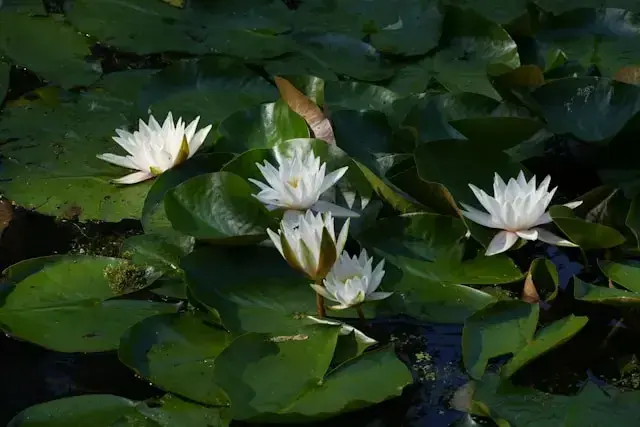
Nymphaea alba & Nuphar lutea
White & Yellow Water Lily
Identification
White Water Lily: Large white flowers (sometimes pink-tinged) on stalks just above the water. Rounded, leathery leaves up to 30 cm across float on the surface.
Yellow Water Lily: Smaller, cup-shaped yellow flowers with more oval and smaller leaves.
Description
Widespread across UK waters, growing in depths up to 5m. Flowers from June to August. While lilies are often visually appealing and beneficial, excessive growth can blanket the surface, restricting light and other plants' growth. Periodic cutting or rhizome removal may be needed to maintain balance.
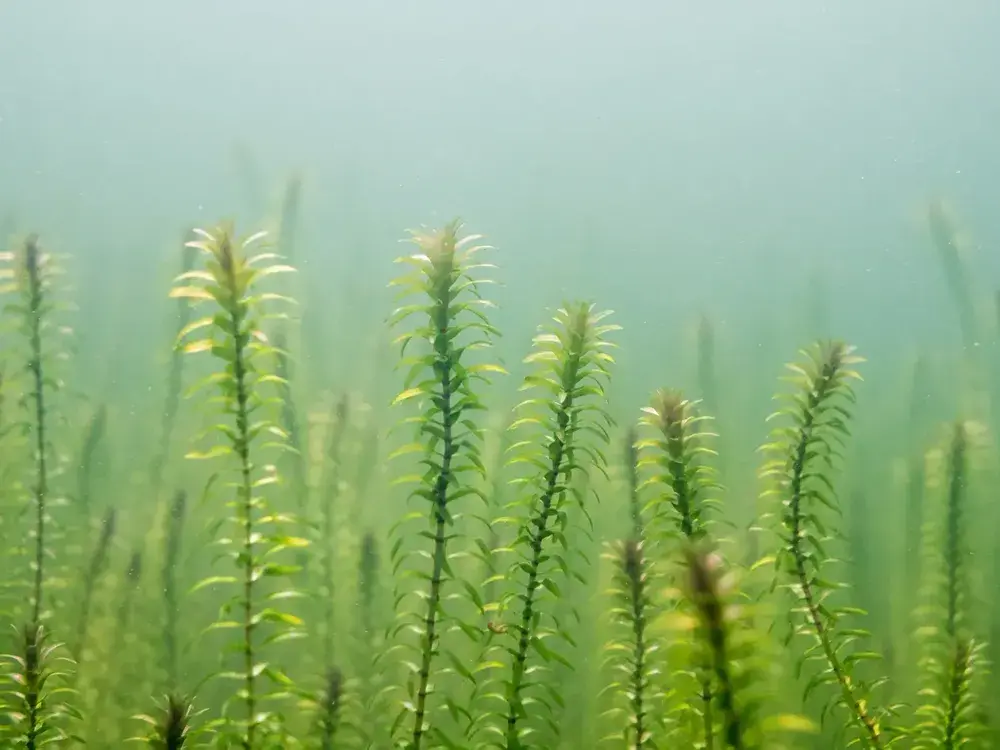
Elodea Family
Canadian Pond-weed & Nuttall's Water-weed
Identification
Canadian Pond-weed: Freshwater herb with much-branched stems up to 3m long. Leaves are dark green and grow in whorls of three along the middle and terminal parts of the stem, becoming denser toward the ends.
Nuttall's Water-weed: Similar appearance but with longer, more slender stems, often freely branched. Leaves are pale green, evenly spaced, typically in whorls of 3 or occasionally 4.
Description
This highly invasive perennial plant family originates from North America. In UK waters they grow rapidly in shallow areas, outcompeting native species, reducing biodiversity, and clogging waterways. Despite being labelled as "oxygenating plants", dense growth can cause oxygen level fluctuations harmful to fish and invertebrates.
Both species are listed under Schedule 9 of the Wildlife and Countryside Act (England & Wales), making it an offence to plant them in the wild. Best management involves cutting in spring to hinder new growth and removing all cut material from the watercourse.
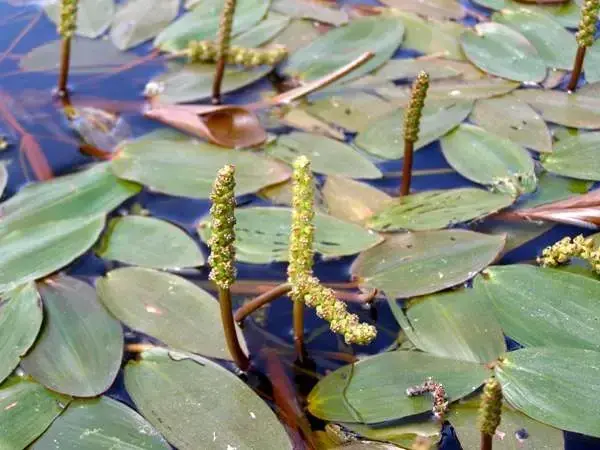
Potamogeton natans
Broad-leaved Pond-weed
Identification
Leaves: Floating, dark green, leathery, 5–10 cm long, pointed tips and rounded bases.
Flower: Dull yellow-green on 5–10 cm stalks.
Description
A fast-growing perennial common in UK lakes, ponds, and canals. Grows in still freshwater, typically in water under 1m deep but can reach 2m. Flowers from May to September.
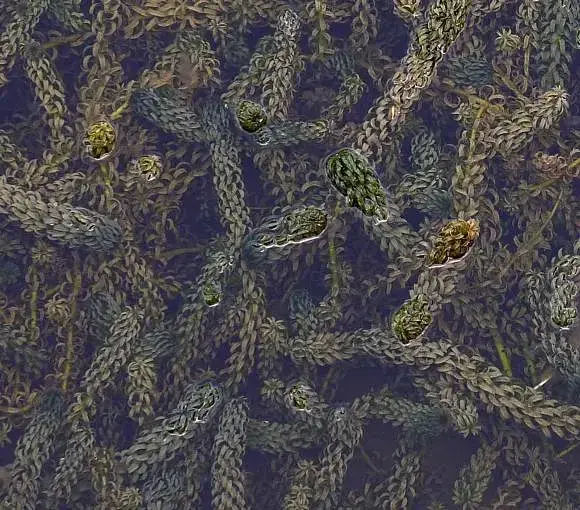
Lagarosiphon major
Curly Water-weed
Identification
Appears as a "floating rope" with branched stems and strongly curled leaves that alternate along the stem. Individual stems can reach up to 3m long.
Description
Native to South Africa, this invasive species thrives in UK waters. Similar in impact to the Elodea family, it rapidly outcompetes native species, causes biodiversity loss, and blocks water flow. Despite its oxygenating reputation, dense infestations can destabilize oxygen levels and harm aquatic life.
There have been cases of Curly Waterweed completely filling large lakes in the UK and Ireland. It is listed under Schedule 9 of the Wildlife and Countryside Act, making its planting in the wild illegal.
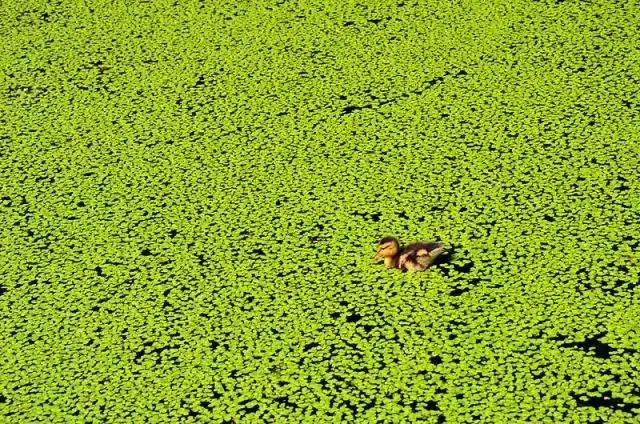
Lemnoideae
Duck Weed
Identification
Tiny floating plants, each 1.5–5 mm in diameter, forming dense yellow-green mats across water surfaces.
Description
Common in ponds, canals, and flooded gravel pits. Duckweed reproduces by division and can rapidly blanket entire surfaces, blocking light and oxygen exchange. Removal by hand is difficult due to its size.
Aquaclear uses Truxor's specialized tools to scoop and remove duckweed effectively from watercourses.
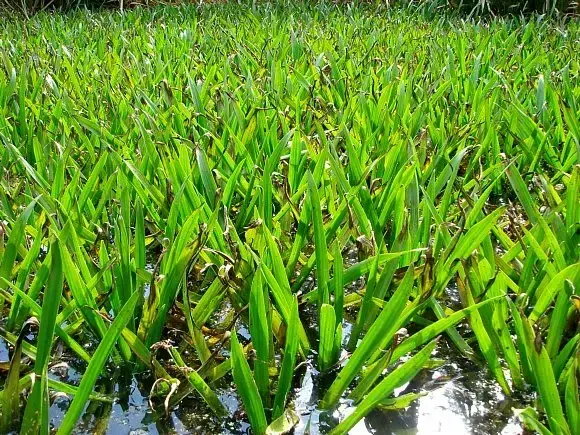
Stratiotes aloides
Water Soldier
Identification
Leaves: Rosettes of sword-shaped, serrated leaves growing from a central point and attached by long, thin strands from the waterbed.
Flower: Single, three-petaled white (sometimes pinkish) flower held above water during summer.
Description
Native to Europe, these plants remain submerged most of the year, surfacing and flowering from June to August. Manageable in small numbers, but large populations can choke small waterways.
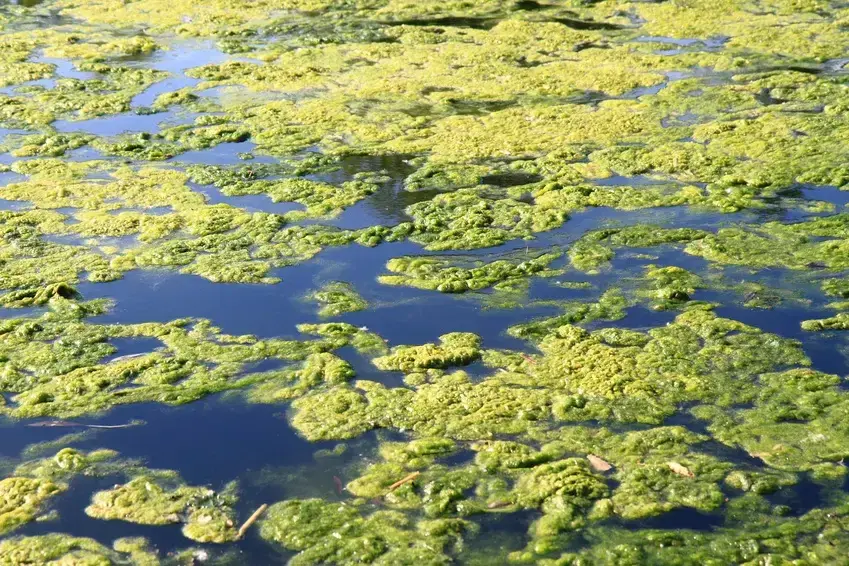
Alga
Algae
Identification
Appears as foam, scum, or mats on or below the water surface, usually bright green to yellowish in colour, often resembling a paint spill.
Description
Algal blooms occur from nutrient overabundance (from runoff), warm temperatures, and still water. These blooms can damage ecosystems by depleting oxygen and blocking light.
Harmful Algal Blooms (HABs): Potentially toxic, often indistinguishable from non-toxic blooms, can harm or kill animals.
Non-toxic Blooms: Still harmful, causing oxygen loss and disrupting ecosystems when decomposing. Control options include mechanical removal, improving water flow, and using barley straw rafts to limit growth.
You can find out more about our work with blanket weed on our Blanket Weed Removal page.
In the Margins
Emergent plant-life that can commonly be found in the margins and very shallow waters of a watercourse.
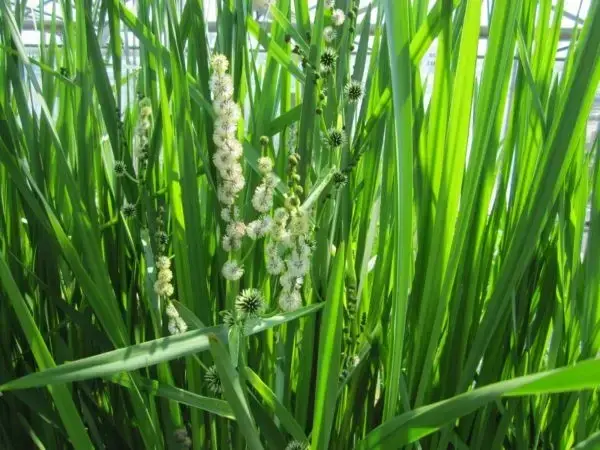
Sparganium Family
Branched & Unbranched Bur-reeds
Identification
Branched Bur-reed: Robust, erect plant up to 1.5m tall with long, spiked green leaves. Produces branched stems with separate male and female flower clusters and spiky fruit up to 1cm wide.
Unbranched Bur-reed: Found in deeper waters (~1m), with narrower floating leaves and unbranched flowering spikes.
Description
Extremely common in UK lakes, ponds, and canals. Dense rhizomes form mats beneath the surface. Overgrowth can block flow and reduce depth, requiring regular cutting or rhizome removal.
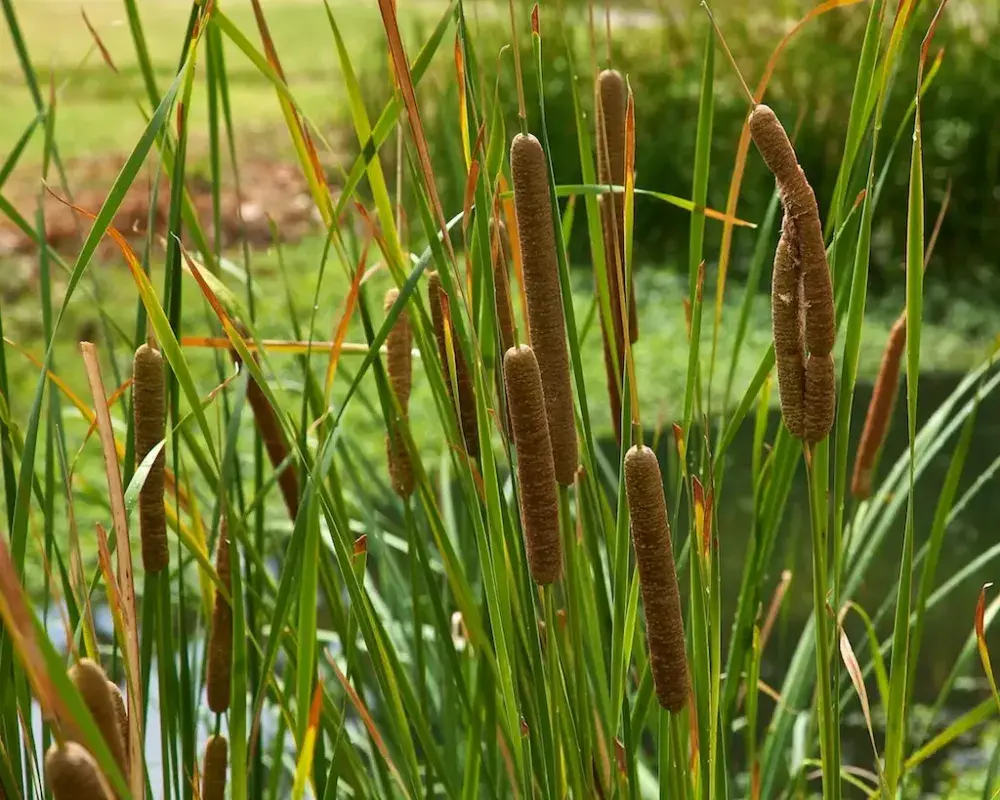
Typha
Bulrush / Cattail
Identification
Tall plant (up to 3m) with long blade-like leaves and a straw-coloured stem topped with a dense brown cylindrical flower spike.
Description
Frequent in UK freshwater habitats, often growing alongside Common Reed. In rich soil, it can quickly become invasive and choke watercourses from the banks inward. Controlled by cutting or removing root matter.
You can find out more about our work with bulrush on our Bulrush Removal page.
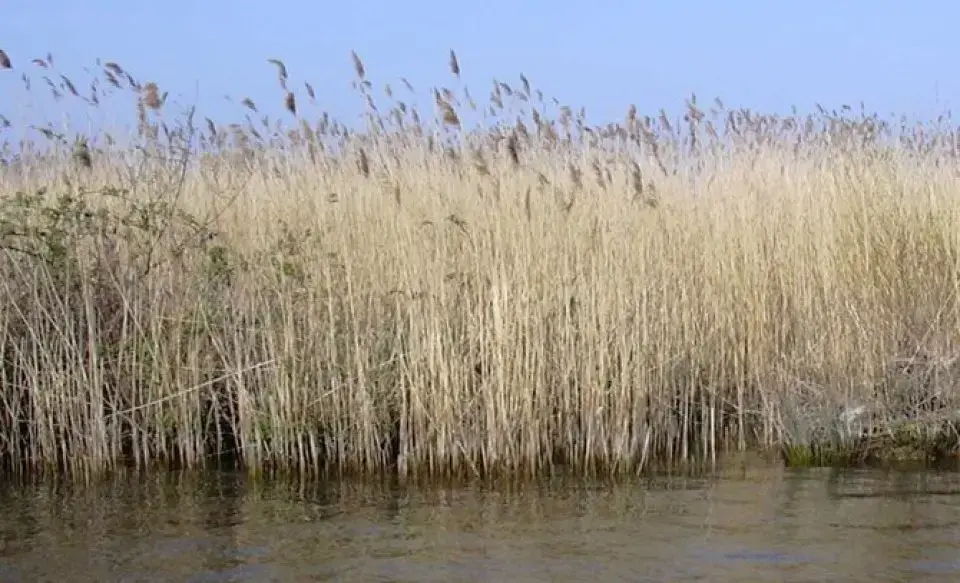
Phragmites
Common Reed
Identification
Tall plant with round, hollow stems typically 2m tall (occasionally up to 4m). Flat leaves taper to a point. Flowers form 20–60 cm clusters ("spikelets") each containing 1–6 flowers.
Description
Forms extensive reedbeds across UK wetlands, turning from yellow-brown in winter to green in summer. Flowers August–October. While vital habitats for birds, unmanaged reedbeds can overtake water areas and require regular maintenance to preserve balance and biodiversity.
You can find out more about our work with reed beds on our Reed bed control page.
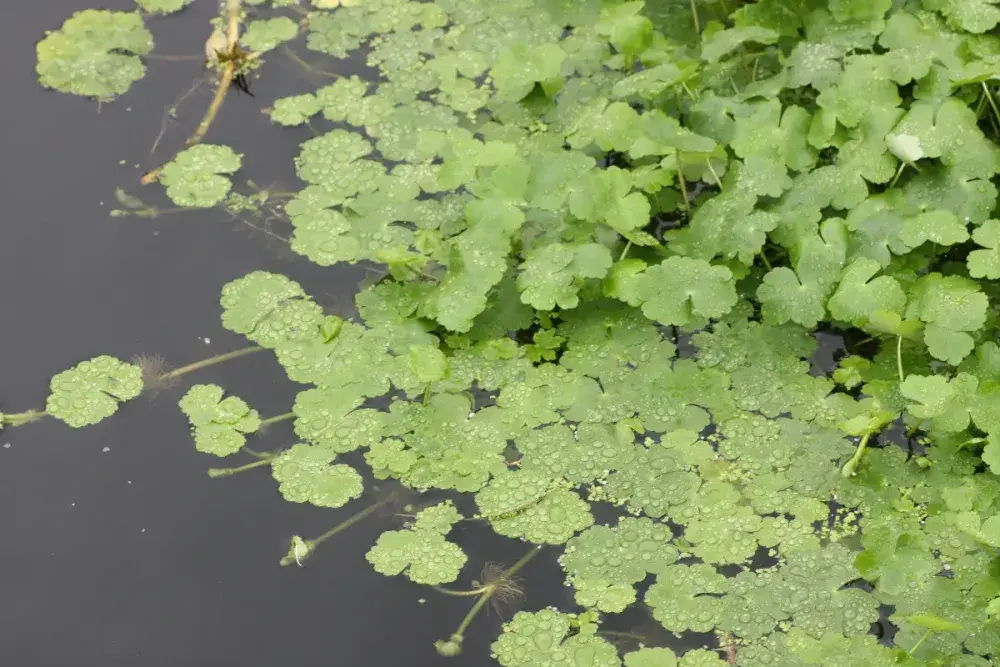
Hydrocotyle ranunculoides
Floating Pennywort
Identification
Leaves: Round to kidney-shaped with 3–7 lobes on long petioles (up to 35 cm).
Flowers: Small pale greenish-white to pale yellow blooms in clusters of 5–13.
Description
A fast-spreading invasive species in UK waterways, growing from shallow margins into deeper water. Banned from sale in 2014 due to rapid spread. Complete removal from the watercourse is critical to prevent regrowth.
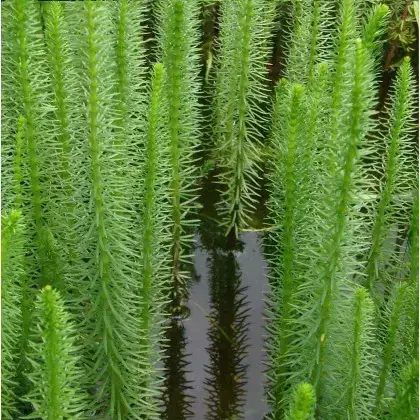
Hippuris vulgaris
Mare's-tail
Identification
Leaves: Grow in whorls of 6–12. Submerged leaves are thinner and longer than those above the surface.
Stems: Solid, unbranched, often curved, up to 60 cm long, with 20–30 cm protruding above shallow water.
Description
A creeping perennial found in shallow water and mud flats. Most leaves are above water, but it roots underwater. Known methane emitter; dense growth can obstruct stream and river flow.
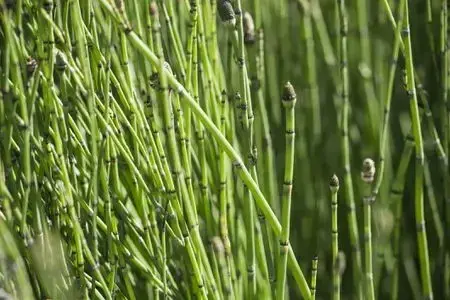
Equisetum sp.
Horsetail / Snake Grass
Identification
Leaves: Thin and spiky, arranged in whorls around the ridged central stem.
Stems: Green, jointed, ridged (6–40 ridges), sometimes with whorled branches.
Description
Though superficially similar to Mare's-tail, it is unrelated. Common in shallow water and margins, it spreads rapidly and can become unsightly or obstructive if not managed.
Need Help with Weed Management?
If you need help identifying or managing aquatic weeds on your site, contact our team for professional advice and solutions. You can also view our Weed Cutting Gallery.